Skip to Content

Why Do Injector Pins Stick in an Injection Mold?


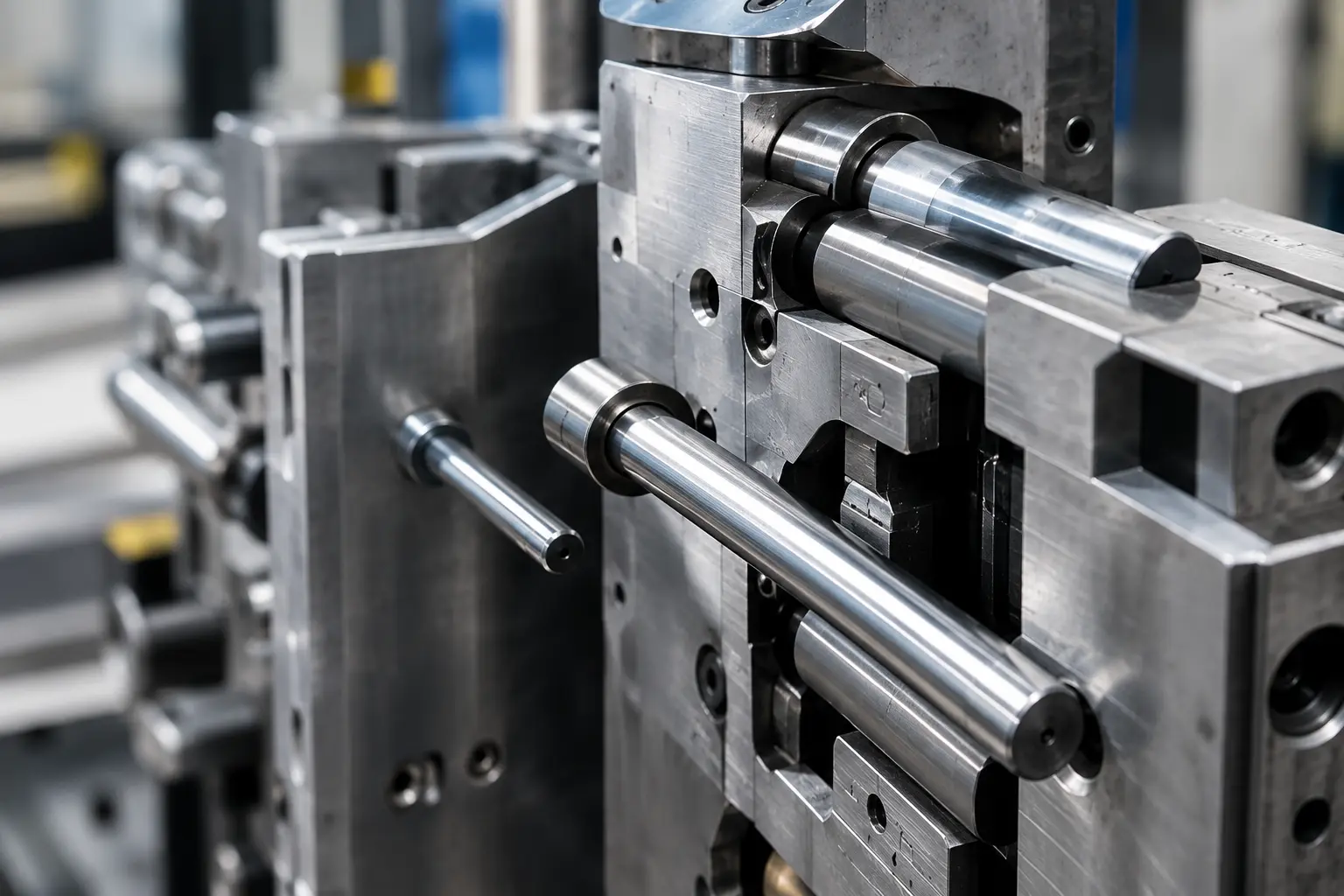
An ejector pin that fails to return, moves with difficulty, or starts binding during the cycle might seem like a minor issue. 


However, in an injection mold, a sticking ejector pin can quickly turn into a major production problem: improperly ejected parts, witness marks on the product, interrupted cycle times, mold damage, and even unscheduled downtime.  

So, before asking “what lubricant should I apply?", you should start by asking yourself: Why is it sticking in the first place? 

What Is Really Happening When an Ejector Pin Sticks?

An ejector pin's job seems simple enough: extend, eject the part, and retract. But that motion happens thousands of times throughout a mold's operational lifespan. 

Every single cycle involves contact surfaces, loads, repetitive motion, and thermal conditions that can generate friction and wear. Injection molding experts point out that intense friction between the ejector pin and the guide hole can lead to excessive wear or galling. 

It is also important to note: an ejector pin that sticks didn't necessarily start failing the moment it stopped moving. Warning signs often appear beforehand, such as: 

  • Stiffer or irregular motion 
  • Visible wear 
  • Marks on the molded parts 
  • Buildup of debris or residue 
  • Needing to lubricate more frequently 
  • Difficulty performing routine maintenance 

Because of this, binding is often just the symptom of an issue that has been developing over time.


Is It Lack of Lubrication or Something Else?


This is where it pays to pause before applying any product. 

Resistance during ejection can be related to lubrication, but it can also stem from the condition of the ejector pin, its guide pin or bushing, the alignment of the ejection system, or even how the part itself is being released. 

For instance, a part can offer higher ejection resistance due to insufficient draft angle, shrinkage, surface texture, or process parameters all of which can increase the force required to eject the part. 

Therefore, when you notice an ejector pin starting to bind, it is worth checking: 

1

Is there mechanical wear?

2

Is there contamination or debris?

3

Is there misalignmnent?

4

Is the part offering excessive resistance during demolding?

Lubrication can reduce friction, but it cannot fix an underlying issue with alignment, wear, mold design, or process settings.

What Conditions Can Affect Ejector Pins?  


An injection mold rarely operates under ideal conditions and you know this. It is subject to elevated temperatures, continuous cycling, particulates, residue, and products that come into contact with components during production and maintenance.

So, what factors can negatively impact ejector pins?

  1. Operating temperature matters, but asking "can this lubricant withstand 150 °C?" isn't enough. You also need to consider how the lubricant behaves over thousands of cycles and how long it remains exposed to those thermal conditions. 
  2. Contamination: Particulates and buildup are also a significant factor. 

For proper ejector pin lubrication, surfaces should be clean and free of leftover oil, grease, and dirt particles before applying a fresh lubricant.
Can You Use "Afloja Todo" to Lubricate an Injection Mold?​

Using penetrating oils or quick-release sprays is a common shortcut in maintenance when attempting to free up a stiff component, assist with part release, or delay taking the mold offline. 

However, there is a key distinction to make: Loosening a mechanism is not the same as lubricating it.

Just because an aerosol spray manages to temporarily free a stuck pin does not mean it is the correct lubricant to keep that ejector running smoothly cycle after cycle. 

Conclusion

Ejector pins operate under seemingly simple conditions: repetitive linear motion inside a bore or housing. Yet behind that simple movement lies a complex tribological system driven by: 

material + geometry + tolerances + load + temperature + contamination + lubrication + maintenance 

That is why, when an ejector pin starts binding, reaching for a different grease shouldn't automatically be your first step. 

The first step should always be identifying what is causing the increase in friction. 

Selecting the correct lubricant can help reduce friction and wear, but only when paired with proper mold design, surfaces in good condition, accurate alignment, cleanliness, and a consistent maintenance strategy. 

In short: a lubricant can solve a lubrication problem, but it cannot fix misalignment, repair a worn housing, or eliminate excessive side loads. 

The key is to diagnose first and lubricate second.

Are your ejector pins binding more frequently?